

Crazy for Jesus
When religion makes us lose our minds

This week there were reports of many American service members filing complaints that high military leaders were using language linking the war in Iran to the Biblical apocalypse and the coming of Armageddon. Their leaders are claiming President Trump has been anointed by God to bring this all about. This should be concerning to all Americans and especially for Christians. War is awful enough on its own, but when it’s being attributed to Biblical prophecy, it becomes an even more dangerous thing. Maybe even… crazy.
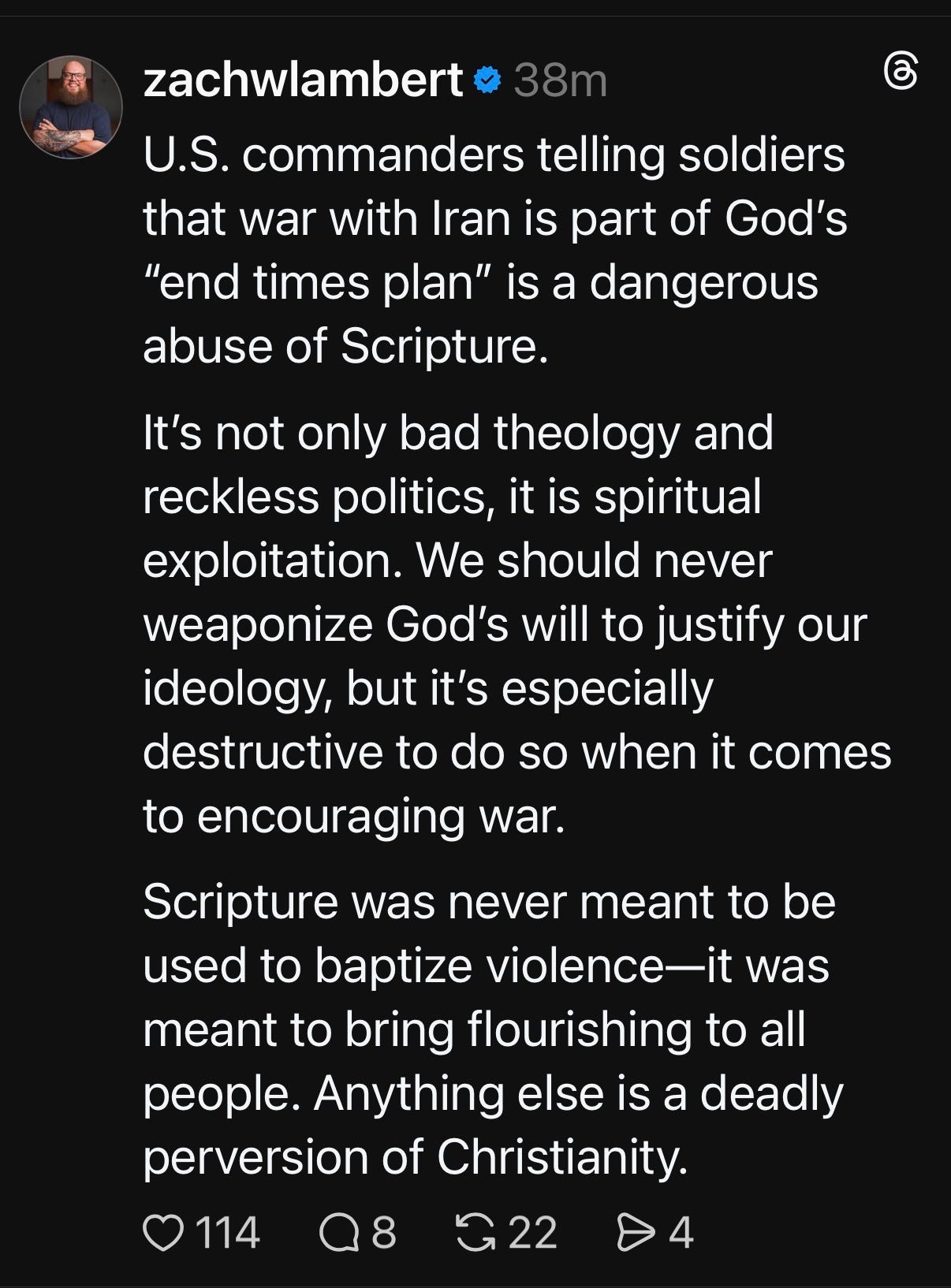
And it’s delusional for Christians to believe that it’s America’s job to bring about the end times. Not only delusional, but also incredibly harmful to our faith. As Robert Arnold so eloquently states in the video below, it’s “Reckless Arrogance of Religious Men”:
But beyond this troubling situation, I see so many Christians believing all kinds of fake news, conspiracy theories, and outright lies being fed to them by extreme right-wing media and even their own pastors from their pulpits. It’s so disturbing to me to see the pervasiveness of this in some Christian circles.
Not only do they say they believe this madness, but they spread it around without a care because… well, because it promotes their own agendas. Who cares if it’s really true, if it makes them feel powerful. God is on their side, so no one can stop them. The holy arrogance of it all is astounding. It makes them justify violence, cruelty, injustice, hatred and even murder, as if it’s all part of God’s plan. (Spoiler alert - it’s not.)
Cognitive dissonance is a phenomenon that can lead people to ignore facts that contradict their existing views to maintain internal stability. It’s an unconscious (or sometimes partially conscious) decision to alter reality in order to protect your world view. I see this being played out all around me right now. Good, loving people who know in their hearts that what is happening around them is so wrong, yet find some way to justify these things in their heads. Horrible things like:
The violence of war; ICE killing non-violent protesters; indiscriminately rounding up immigrants and deporting them without just cause; arresting and detaining innocent American citizens; our President and his administration consistently using dehumaning language; white supremacy; racial profiling; separating families at the border; terrorizing entire communities, taking away basic civil rights from our LGBTQ+ friends, and so much more.
I have a few honest friends willing to tell me that they are indeed conflicted about much of this, but they still defend it. They have convinced themselves that it’s all ok because their political side (and usually religious side as well) is enforcing those things. And their side is the “right” side, so they ignore the facts set out before them. If they ponder too long on these facts, it could possibly shatter some of their deeply held beliefs. Who wants that to happen, right? Sigh…
That’s why faith deconstruction is so scary to many faith leaders. When someone starts asking the hard questions and looking for answers that actually make sense, it can be problematic to pastors who need to control their “flock.” How can you control someone who starts thinking for themselves and doesn’t just believe what they are being told to believe?
But thinking for ourselves is what we are called to do as followers of Christ. In Romans 12:2, Paul tell us to “be transformed by the renewing of your mind.” We were given an intellect for a reason. We are to be discerning and wise when it comes to information given to us, and when something doesn’t make sense, or dare I say, when it doesn’t “feel right” in your gut, we should ask the hard questions and engage in diligent research to get to the truth.
Religious zeal shouldn’t trump common sense, but yet it seems to be doing just that these days. The religious leaders in Biblical times thought they were just protecting their faith when they got the Roman empire to crucify Jesus. Even Paul, who was initially zealous in his desire to persecute the early Christians, did horrible things out of his intense love for God. Or at least the way he understood God to be at the time. But all that changed when he met Jesus on the road to Damascus.
Paul was transformed. And isn’t that the goal? We can know all the scriptures, all the parables, all the history about Jesus, but information does not always equal transformation. Especially if we are living deeply in cognitive dissonance.
Here’s a little test to see if you might be buying into things that you know in your heart are wrong: Do you find yourself saying, “yeah, but…” often? For instance:
The killing of Renee Good and Alex Pretti was so wrong. “Yeah, but, they should have just obeyed the officers”
Deporting all these hard-working immigrants is so wrong. “Yeah, but, they should have just come in legally.”
The killing of Ruben Ray Martinez in Houston by DHS was so wrong. "Yeah, but he shouldn’t have tried to run away.”
Going to war without a good cause is so wrong. “Yeah, but our President has been anointed by God, so whatever he does is ok.”
I saw this image recently and it speaks volumes:
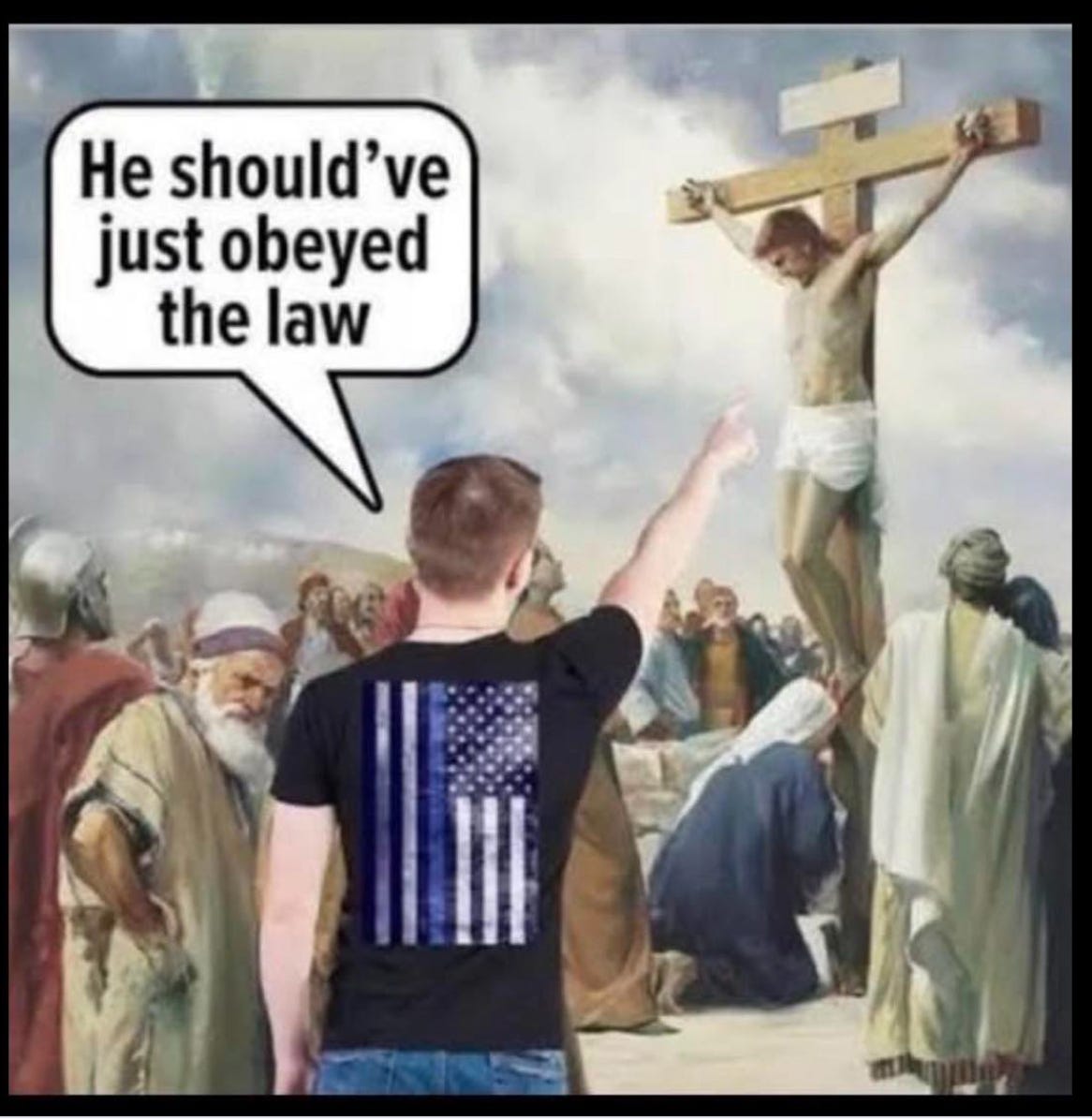
As my pastor noted in his sermon this past Sunday, there is a difference between legality and morality. Not all things that are legal are moral. And it takes Godly discernment to know the difference.
I don’t mean to sound like I have it all figured out, because I most certainly do not. I used to think I did, though. When I was steeped in Americanized Christianity, I thought I had all the answers. Now, I know that I do not know. I do not have all the political, cultural, or faith answers. And I certainly haven’t got God figured out. But in my uncertainty, I have found so much comfort, because I don’t have to live in cognitive dissonance anymore.
I want to share part of a prayer from one of my Lenten devotionals from this past week:
"Give us courage for the holy work of discernment.
Where pride has shaped our faith, humble us.
Where fear has bound us to rules without love, free us.
Teach us how to uphold what gives life,
to release what harms,
and to read all things through the lens of Christ’s faithfulness.” - Benjamin Cremer
Isn’t that beautiful?
We can’t let pride and fear be our guides. And we can’t be afraid to question what we know doesn’t add up to what we say we believe. It is our duty as Christians and Americans to call out what we know in our minds and hearts to be wrong. We are to be people of love, joy, peace, patience, kindness, goodness, faithfulness, gentleness, and self-control. I’ll even add a little grace, mercy, compassion and empathy in there as well. We should be the healers in this world. Instead, I see too many standing by as we harm others and doing it in the name of Jesus. When Christianity partnered with empire, we lost our way.
So, may we be so bold to ask all the right questions, both politically and spiritually, and not be afraid if the answers don’t align with what we are being taught. Christians have gotten it wrong throughout history. Teachers are fallible. The Holy Spirit within us is not.
All I’m saying is that it’s ok to be crazy about Jesus. Heck, I love the guy too! But let’s not lose our common sense in the midst of our zeal. We can’t walk through life with blinders on, ignoring the signs all around us that we might be wrong about something. No matter how deeply you believe something to be true, that doesn’t always make it right. Being faithful servants of Christ means to love each other and love God with all our hearts and our minds.
QUESTION: What does loving God with all your mind look like to you?
Love ya’ll… M
Another excellent blog, please keep writing!